NewsNow

Since 1982, Reit-Syd Equipment in Dauphin has been a trusted name in farm equipment, helping the Parkland's farmers and ag producers from the first day of seeding to the last day of harvest.
Don Tarrant, Owner and General Manager of Reit-Syd Equipment, said though they mainly sell John Deere equipment, they're able to help farmers in a lot of ways, especially with their parts and service department.
"We have extended hours right from beginning of seeding right through till the last of the crop is off, parts department is open six days a week and on-call on Sunday, as well [our] service department, in the heat of it, will be full-on seven days a week, from the start of the day till whenever they get the last machine," said Tarrant.
Tarrant said he's very confident in his parts and service staff, and they'll be able to give a hand for most, if not all, equipment that needs parts or service, especially if you need replacement parts on a short schedule.
"They have shifts, so they'll work right through, shifting through the weekends...the parts people do come in very very late hours or very very early hours to bring in parts, most parts we do have in stock, and if it's something we don't have in stock, we are able to get it overnight, and on the very outside, possibly three days," said Tarrant.
Harvest aside, Reit-Syd Equipment has always been very involved in the Parkland's communities. From donating much-needed money to the Countryfest Community Cinema, to playing a hand in sponsorships for just about every harvest festival and ag society fair, Tarrant said without the Parkland, there would be no Reit-Syd, so it just makes sense to give back as much as they can.
Reit-Syd Equipment is one of 730 CKDM's Harvest Helpers this season, giving the Parkland's farmers and ag producers a huge boost with their parts and service department.

- Details
- Contributed by Ian Gillingham

The City of Dauphin and RM of Dauphin are once again promoting their Business Park to the north of the City, inviting industry to help boost the area's economy.
Martijn van Luijn, City of Dauphin Economic Development Manager, said it's been a joint venture between the City and RM for a while.
"So it's in the rural municipality, so it's in the RM but is jointly owned by the RM and the City. So it's just north of town, alone highway 362, the Valley River Highway...we have tried to attract businesses in there for many years, but recently we've seen more activity, we've seen more interest in it. We've seen a general growth in business and economy in our community anyway, and this sort of falls in line with that," said van Luijn.
According to van Luijn, now is the perfect time to promote the Business Park. With the Justice Centre set for construction, which will be in the same area of the RM, multiple infrastructure upgrades are needed, like sewer systems. Those upgrades, van Luijn hopes, will serve as another benefit for businesses to consider the Business Park.
"The new Dauphin Centre for Justice is going to be on the west side of the Business Park, so technically within, albeit it's own piece of land, that we have allocated to the Province for this project for many years...we're going to be investing in the Business Park in the future by putting more roads in, different paving, there will be ultimately sewer there, because right now there is water but no sewer, because the Centre for Justice will need sewer, so it's going to be a whole bunch of different things happening, so this is a great time for us to start promoting these lots in the Business Park, and that's essentially what we're doing," said van Luijn.
For local businesses, there are a lot of benefits to getting an industrial lot in the Business Park, from location and future infrastructure improvements, to cheaper prices from the RM and City, and even cheaper prices if your business will bring jobs to Dauphin and the community.
"If you go around in the region, it is about one-third below the average price for industrial land, so we're offering that short price...in addition, if it's a business that you start that has jobs attached to it or an increase in assessment, if you build buildings on it for example, we're actually open to offers that are lower than that," said van Luijn.
Amid recent concerns in the region around infrastructure project delays due to contractors working on flood damages, like the recently announced delay of the Craft District, the Centre for Justice's construction timeline is also uncertain, though no announcements have yet been made by the Province.
- Details
- Contributed by Ian Gillingham
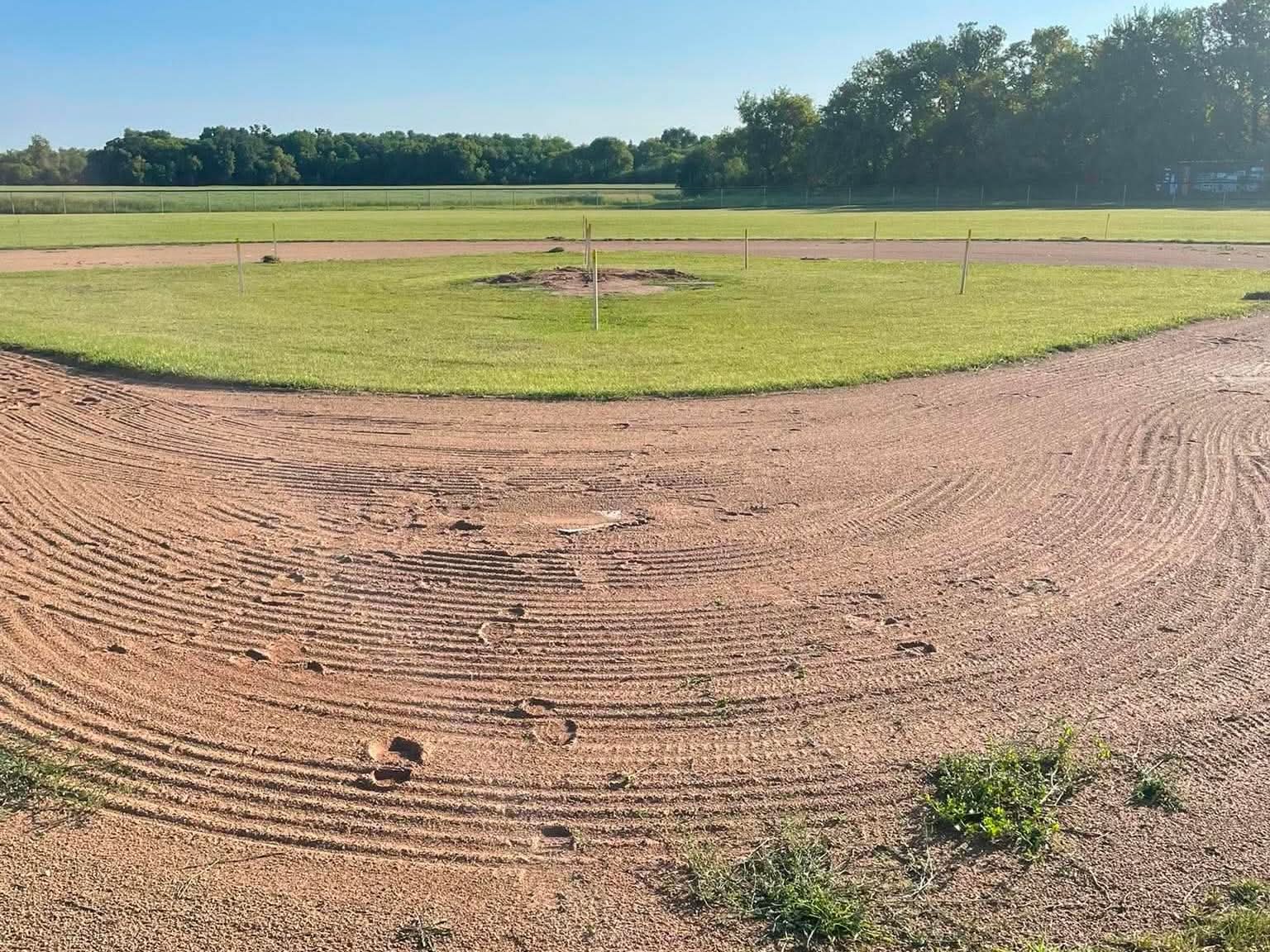
The infields on diamonds A and B at Vermillion Sportsplex in Dauphin are all sand.
Thanks to some fantastic community support and a vision from the Dauphin Minor Baseball Association, the infields on diamonds C and D will now be sand. The infield grass has been removed and the upgrades to both diamonds are ongoing.
Kelly Plesh says player safety is a priority. It's been a while since both diamonds have been improved, besides maintenance. The total cost of the renovations will be between $50,000 and $60,000.
The upgrades are made possible thanks to grants from Fusion Credit Union, the Dauphin and District Community Foundation, the Rotary Club of Dauphin, and the Manitoba government.
"Our community support has been great over the years," said Plesh. "These mean the world to us so we can continue to improve the diamonds."
The goal is to have the upgrades completed later this year.
"It's an amazing experience. We've had some great volunteer support from our board," added Plesh. "Local community members have given us in-kind work and equipment, which has been a great time saver. Obviously, money-wise as well. Our goal is to host a provincial championship in the very near future."
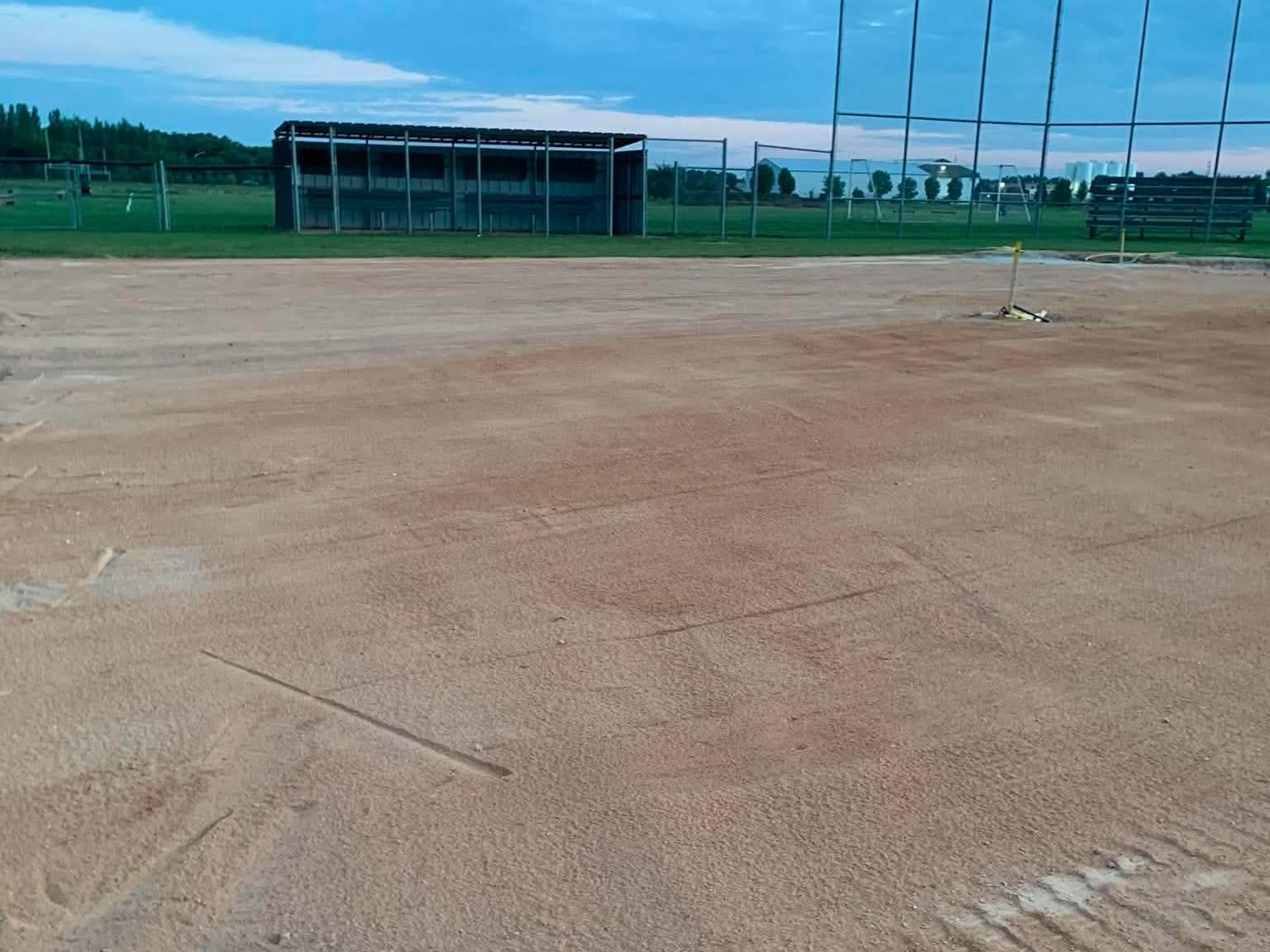
While Plesh is thrilled to be a part of the upgrades, she says community members are excited about the upgrades.
Coaches, players, and fans are already looking forward to next season.
"So we're hoping that it gives a little push to have the upgrades done so we can have higher registration numbers next year," said Plesh.
Four diamonds with all-sand infields are on the way at Vermillion Sportsplex.

- Details
- Contributed by Darnell Duff

The Parkland Humane Society is gearing up for its Endless Paw-Sabilities Market.
It'll take place on Saturday, September 12, at 304 Whitmore Avenue East and will run from 10:00 a.m. to 3:00 p.m. Jennifer Langlois, office manager, says it's open to vendors looking to share their homemade goods and crafts.
Langlois invites young entrepreneurs to register.
"Anything is allowed. Knitting, pottery, or 3-D printing, anything like that," said Langlois. "It's all welcome. We have a bigger venue this year, so we're hoping for a bigger market."
This is the third annual event. It's a key fundraiser for the Humane Society, which is busier than ever.
Over the past two years, the Society has brought in between $5,000 and $6,000. That comes from table sales, which are $25 apiece, and they have a raffle.
Langlois said bringing those funds in is critical.
"It means quite a lot. It means we can take care of more animals," added Langlois. We can get our bills paid. To make sure the animals get the best of the best while they're in our care."
If you're interested in getting a table, email This email address is being protected from spambots. You need JavaScript enabled to view it.. You can also text 572-5064. All vendors and makers are encouraged to get a table.
The Humane Society is also looking for volunteers. You can volunteer with a friend or by yourself. Multiple shifts are available, seven days a week.
By volunteering, not only are you giving back, but you'll feel a sense of accomplishment.
"Lots of people come in with a smile on their face and leave with a bigger one," ended Langlois. "Playing with animals is like therapy. You can come in and help them. You feed them and see how happy they get when you spend time with them. You can volunteer two or three hours a week; it's nothing that would really affect your life too badly."
They're also looking for donations. The dog wish list includes durable kids' swimming pools, slip leashes, collars, soft and hard food, and KONG toys. The cat wish list includes canned wet food, hard cat food, and cat treats.
If you're interested in volunteering, head here. You can then take your application to the facility between 1:00 and 4:00, Tuesday to Saturday.
- Details
- Contributed by Darnell Duff
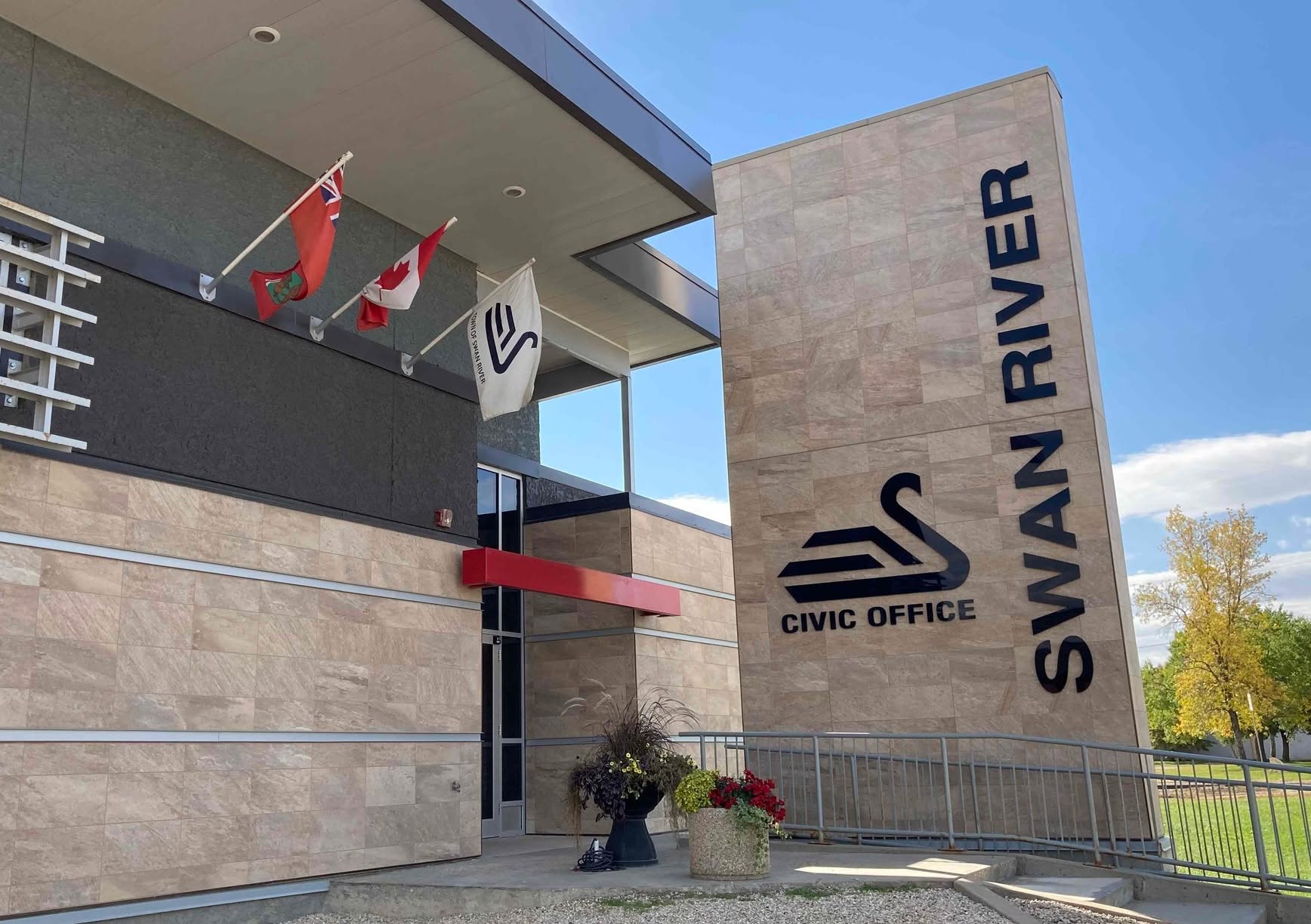
Will Tewnion was named Chief Administrative Officer for the Town of Swan River in March of 2025.
Reporting to the mayor and council, Will was responsible for providing leadership and senior management for the Town's municipal operations and departments. He was tasked with implementing the direction, policies, bylaws, resolutions, and decisions of Council.
He was required to build effective relationships with residents, community organizations, businesses, neighbouring municipalities, First Nations, and provincial and federal governments. He also supported long-term strategic planning and the continued growth and development of the Town of Swan River.
On July 24, the Town of Swan River announced that he will resign from the position. He will remain in the role until October 23.
Mayor Lance Jacobson wasn't expecting Will to leave, but he thanked him for his service. He understands it's a demanding role and comes with challenges.
"While he was in the office, Will served very well," said Jacobson. "He organized the office, and the staff really liked him. Council enjoyed working with him. He made the decision that it's time for him to move on."
Will is a former RCMP officer. He has family and grandkids. Lance understands his decision and wishes him the best moving forward.
Now the search for a new CAO begins. The successful candidate should have a certificate in Manitoba Municipal Administration or equivalent municipal administration education and experience. They should have experience working with elected officials, boards, committees, and councils. They should also have experience in financial planning, municipal budgeting, and financial oversight.
Someone with strong leadership, problem-solving, decision-making skills, organizational skills, and the ability to manage multiple priorities and deadlines is what the Town of Swan River is looking for.
"Be willing and ready to take on challenges that we have to deal with regularly," said Jacobson. "Just like we did with the flood. Be prepared for emergencies in the future or anything else that comes our way. Making sure that we have good relations with other municipalities. Having that ability to connect and work with our provincial and federal governments."
As CAO, some of the key responsibilities include supporting and developing the Town's management and employees.
Provide leadership in human resources and labour relations within a unionized environment, and ensure municipal operations comply with legislation, policies, bylaws, agreements, and regulatory requirements.
If you are interested in applying, Lance said living in Swan River is a great thing. The growing community has lots to offer, including recreation, arts, and dining.
"You know, people always tell me they can't believe what Swan River has to offer," said Jacobson. "We have a lot to offer for our CAO. Whether single, married with children, and so on. There is a lot to offer for them to have a good quality of life."
He says anyone interested in taking on a new challenge and wanting to take on a bit more could find this the perfect fit.
"We have really good staff. They're organized from the financial side of things to day-to-day operations," ended Jacobson. "We have great people working. For a CAO to move into this position, it won't be too difficult. There isn't any cleaning up. A person can come and immediately start getting to work."
You can submit your application to This email address is being protected from spambots. You need JavaScript enabled to view it.. If you have any further questions about the position, call 734-4586 and ask for Uriah Waldner, executive assistant.
Applications will be accepted until the position is filled.
- Details
- Contributed by Darnell Duff
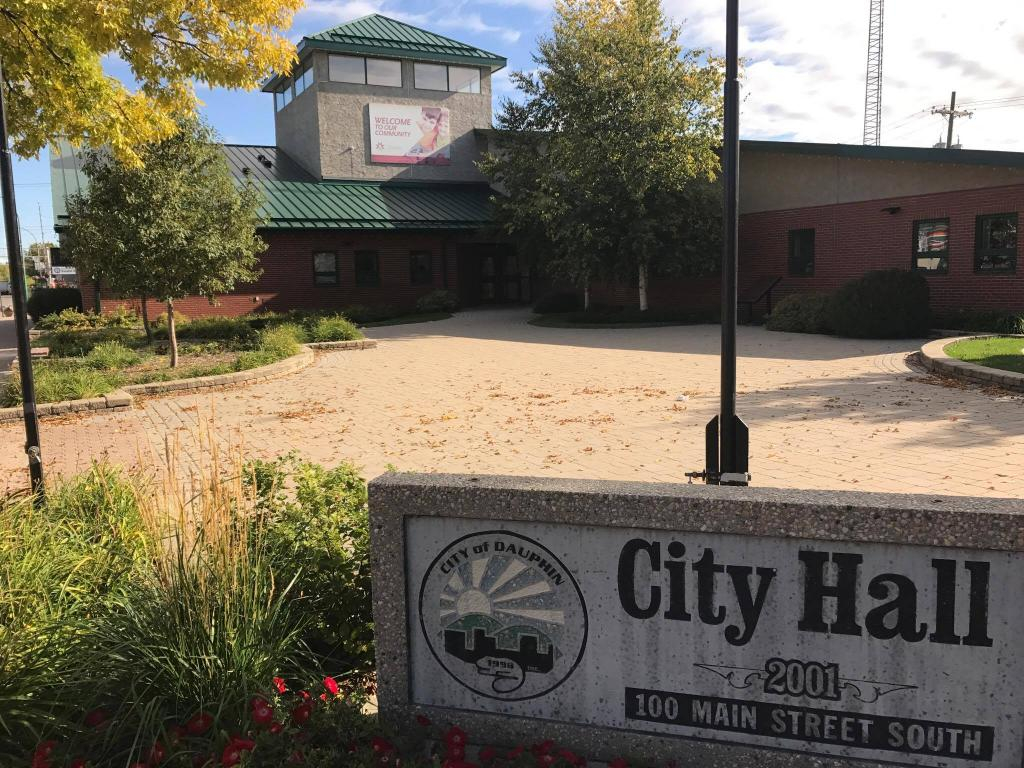
The City of Dauphin has announced the construction of the Craft District, set for later this year, will be delayed until the start of 2027 because of widespread flood damages and impacts.
In a Facebook post, the City said flooding has created additional demands on municipal resources, and has affected both contractor availability and construction schedules.
Martijn van Luijn, Dauphin's Economic Development Manager, said the decision to delay the project was made after conversations with City officials and contractors.
"We decided after review that we are going to re-post [the Request for Proposals] in January for another fair bid process, but that falls much more in line with the construction seasons...we got feedback from the companies that are interested, and that are already working in our community, some of them have worked in the community, and they are all in the region, but they are all working on flood related stuff. There's many roads and bridges that have damage, and so there's just no time for them to even consider this, put a bid together, they're just way too busy," said van Luijn.
van Luijn also said moving the Request for Proposals to be more in-line with construction season means the City will get a much more competitive price, carrying a lower cost for the City. van Luijn wants to remind residents that the delay will not affect city taxes in any way, as the money is already budgeted, and set aside as part of the City's reserves.
"That doesn't really affect the budget or the regulatory, sort of rules around the budget. We can just leave the money there, and then we can use it next year...[reserves are] outside of what we call our regular or general budget, and the money is allocated for it," said van Luijn.
The Craft District is still a top priority for the City of Dauphin, and van Luijn said they still look forward to seeing the ways it will help improve the community.
- Details
- Contributed by Ian Gillingham
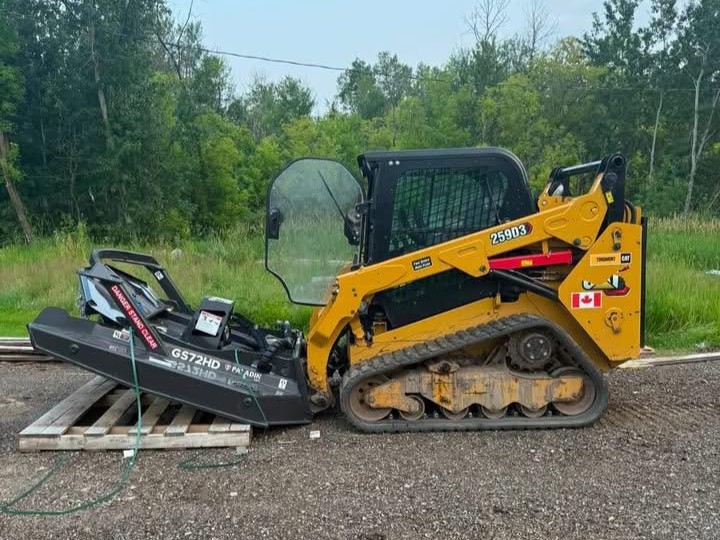
Derrick Zalluski, Owner and Operator of Parkland Skidsteer and Trailer Rentals, started off small a few years ago with renting out a camper here and there. Now his operation has expanded a good bit, including a variety of trailers and a skidsteer.
With that expansion of rentals, they've also expanded the services they offer, including all kinds of landscaping.
"Our primary focus is rentals for any farmers or businesses out there that need a machine on a daily, weekly, or monthly basis...I'm for hire as well, if anybody needs any kind of dirt work, driveways, gravel paths, landscaping, barn or shelter clearing, we'll pretty much do anything," said Zalluski.
Why should Parkland famers consider Parkland Skidsteer and Trailer Rental? Zalluski said the fact it's a local business can go a long way, especially if farmers need an emergency rental when their own equipment breaks down.
"If they have one and all of a sudden it breaks down on them and they're in a panic to replace it, we're local, I don't know who else rents skidsteers around here, but it saves a guy from running to Brandon or getting one sent out from Brandon...as the harvest goes on and we interact with more of the farmers in the local area, we hope to make a good impression and hopefully extend our business a little bit more for guys that are in need," said Zalluski.
Parkland Skidsteer and Trailer Rentals is one of 730 CKDM's Harvest Helpers this year, showing a strong commitment to helping the Parkland's farmers and ag producers thrive this harvest season.
- Details
- Contributed by Ian Gillingham

If you hear some loud noises when you're out and about in Dauphin tomorrow, look up - you might take a look in the past!
The Commonwealth Air Training Plan Museum in Brandon is bringing a couple of their old WWII trainer aircraft back to Dauphin for the day. Darrell Aitken, event coordinator, said there were originally three planes planned to come, but one of them had to cancel because of runway conditions.
"Everything is looking good, other than we have lost one of the planes, it's not going to make it up," said Aitken.
The plane in question, the Boeing-Stearman Model 75, requires a grass landing strip, and Dauphin's conditions make it too risky to land. The museum has added additional flights in the other two planes to make up for that.
Aitken says even if you don't take a ride in the planes, it'll still be a fun afternoon taking a look at Dauphin's rich history, focusing on the Commonwealth Air Training Plan. One of the big selling points is the event is free to attend, though donations are recommended.
"Everything is no charge. All we ask for is a donation if you can afford it, if you can't, bring your kids anyway, we want this to be a family thing," said Aitken.
Last year's even went well, and Aitken expects it to go the same this year, especially with Sunday's forecast showing lots of sun.
- Details
- Contributed by Ian Gillingham

Ste. Rose de Lima Roman Catholic Church is getting ready for their Pilgrimage of Peace, set to take place tomorrow.
According to Elvier Brunel, long-time parishioner, it'll be a very packed afternoon, and all are welcome.
"There is adoration beginning at 12:30, and during that time we also have confessions for people who want to be reconciled with themselves and one another, and the world...it's a full afternoon, and we welcome everyone, and if you're catholic or not. Maybe it's an opportunity for catholics who want to return and are hesitant, we welcome them back, and bring their families together," said Brunel.
After adoration and confession, there will be a procession to the grotto, eucharistic celebration, and food and fellowship. With an event that packed, it simply wouldn't happen without volunteers. Cindi Berg, Pilgrimage of Peace Coordinator, said that's what they need most right now.
"Now we're asking for volunteers once we've got the ground work all done, so we're asking for volunteers for the next couple days to come to the church and help, they help with the preparation of the food, and the flyers, and all kinds of decorating," said Berg.
Though it's technically the 4th year of the event, Brunel said this year is more like the second, as it's the second they've held the event outside and on a larger scale. For herself, being part of the parish for 78 years so far, being able to help others connect with faith has a lot of meaning.
"Well it's really a driving force for me, it's a living faith, and I was just blessed with grandparents and parents, and as a parent myself and a grandparent now, to encourage people to stay connected to their roots and their church," said Brunel.
The Pilgrimage of Peace at Ste. Rose de Lima Roman Catholic Church kicks off at 12:30 on Sunday, and is open to all.
- Details
- Contributed by Ian Gillingham

Dalton Roussin has been taken into custody.
The Dauphin RCMP received a number of tips from the public in the past couple days. On Thursday, they located and arrested Roussin at a home in Dauphin.
The RCMP thanks everyone who shared their original post and got the word out.
ORIGINAL STORY:
The Dauphin RCMP are asking for your help in finding Dalton Roussin.
He's wanted on charges of failing to comply with his release order conditions. Dalton was recently seen in Dauphin on Elmay Street.
He is believed to still be in Dauphin, but is also known to frequent the Ste. Rose and Winnipegosis areas.
If you know where he is, call the Dauphin RCMP at 622-5020.
- Details
- Contributed by Darnell Duff

The Rorketon Ripper. The Harvest Sun Music Festival. The Whitemud Music Festival. Lake Audy's Bison enclosure in Riding Mountain National Park.
Those are just a few of the things you can enjoy this weekend. Another option is heading to the Eriksdale Sports Grounds for the 6th Annual ROGerKimLee Music Festival. It runs from Friday through Sunday.
Friday's festivities include Saint Whiskey and the Annual ROGerKimLee Jam. The entertainment rolls into Saturday and picks up the heat with performances all day. The list of performers includes Fuller Hull, Shay Wolf, Orvis, and the Dust Rhinos.
Sunday features the Old Time Fiddle Magic and Prairie Moon. Food and beverage vendors are on site, including an outdoor beer garden. Shop through a variety of handmade and designed goods.
This event isn't just for adults. Add in games for the kids and creative workshops throughout the weekend.
A three-day general admission pass is $110. It's only $35 for a student three-day pass. You can also purchase day passes.
The ROGerKimLee Music Festival is back this weekend at the Eriksdale Sports Grounds, and it'll be an electric atmosphere. You can purchase tickets here.
- Details
- Contributed by Darnell Duff