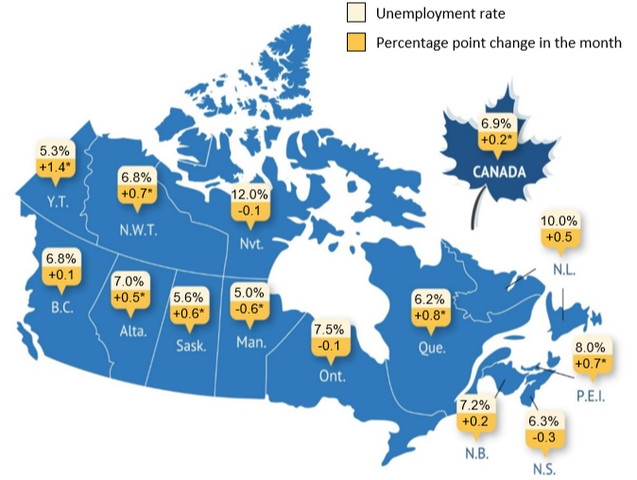
Statistics Canada released their labour stats for April, which saw Manitoba's unemployment rate sharply drop to 5%, making it the lowest in Canada.
Jamie Moses, Manitoba's Minister of Business, Mining, Trade and Job Creation said it goes to show that the provincial government's strategies to solve labour market problems is working.
"Good news that our unemployment rate is dropped to now the lowest in all of Canada at 5%, compared to 6.9% the national average, and so I think this is the result of our government doing hard work to ensure that more Manitobans have opportunities to work here, and that we're setting a right environment for business investment in Manitoba," said Moses.
Now that the weather is warming up and we inch closer to the start of seeding season, Moses commented on Manitoba's strong agricultural sector. He said that remains a very high priority for the provincial government, and they're investing in other vital sectors too. They're also committed to the development and expansion of the Port of Churchill, which has been one of the province's main priorities across all sectors this year.
"We certainly know that Manitoba's long tradition of strong agriculture, ag tech, ag manufacturing base, we'll continue to lean into some of those sectors, as well as seeing a lot of growth in construction, manufacturing, and transportation...right now our government is working collaboratively with First Nations and Métis on supporting the development of the Port of Churchill, and at the same time we're working with private industry and the federal government, including the major projects office to advance the opportunity at the Port," said Moses.
The Manitoba government has a good track record when it comes to major projects like the Port of Churchill expansion. Other projects, like the Lake Manitoba and Lake St. Martin Outlet Channels project, show that the provincial government can tackle large investments, especially when it comes to working with both First Nations and the private sector.
"We know this is a project that approximately 80% of Manitobans support as a driver for economic growth in our province...we know as Manitobans, we've got a strong track record of accomplishing big things. Those big challenges get accomplished and we can overcome them when we work together, and the project of expanding out the Port of Churchill is not different, we're going to do it by working together with communities," said Moses.
Speaking more on the private sector side, part of Moses' mandate letter from Premier Kinew listed working with the Business and Jobs Council to grow the economy and create good jobs as a main priority. Moses said the numbers prove that his work with that council and listening to Manitoba businesses has paid off by giving Manitoba the lowest unemployment rate in the country.
"We've worked on sub-committees within that council, we've put together a lot of recommendations for government, we're listening directly to the business community. And as a result, we put forward our economic development strategy last fall, which outlined some of the priorities for our government, to build jobs, to create atmosphere for business investment, and develop the skilled workforce of Manitoba's next generation...since we took government in 2023, we've created over 36,000 new good-paying jobs in Manitoba," said Moses.
Manitoba's Economic Development Strategy outlines the ways the province has worked with interest groups all across Manitoba, with a main goal of driving economic growth in every part of the province.