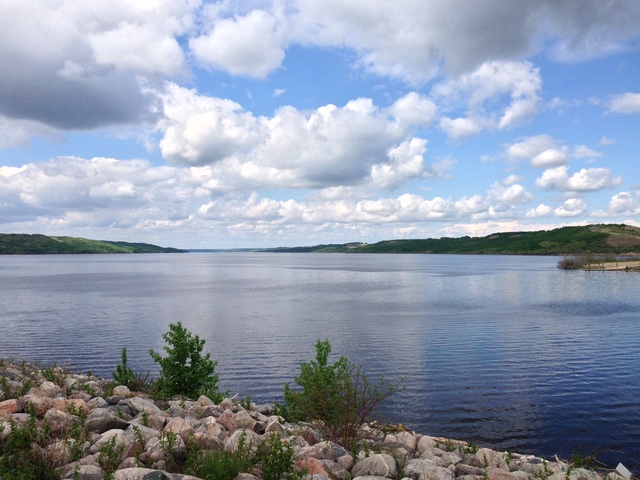
Both Manitoba and Saskatchewan have activated their Aquatic Invasive Species Early Detection Rapid Response Plans after Zebra Mussel veligers were found in Lake of the Prairies.
Elliott Brown, Assistant Deupty Minister of Water Stewardship with Manitoba Environment and Climate Change, said they're not sure exactly where these Zebra Mussels came from, but both Manitoba and Saskatchewan are now relying on their clean, drain, dry procedures more than ever.
"Zebra Mussles, like most aquatic invasive species, are spread by people moving their watercraft and equipment from invaded waters where AIS are present to non-invaded waters, that's why it's so important that people follow the requirement to clean, drain, and dry their watercraft and equipment. We don't know specifically what boat they arrived on or anything like that, but that's the most likely path, and there's no natural path for them to move downstream into Lake of the Prairies...we know it's a busy lake, it's a very popular fishing destination, so we need all water users at Lake of the Prairies and on the Assiniboine to follow those requirements, and also to decontaminate, and that's a requirement in both Saskatchewan and Manitoba now for Lake of the Prairies, and it's the same for any other Zebra Mussel invaded waterbody," said Brown.
As part of Manitoba's rapid response plan, more inspection and decontamination stations are popping up all across the area, and along any major routes to Lake of the Prairies. Brown said inspection stations and decontamination stations are some of the best ways to ensure infected watercraft don't make it to other bodies of water.
"In Manitoba, we already have inspection stations operating on major routes in the region, near Minnedosa and near Dauphin, and our colleagues in Saskatchewan have stations operating on the main routes around Lake of the Prairies already...within the lake it's very difficult to stop Zebra Mussels from spreading downstream when you're in a river system like the Assiniboine once they're established, and they will move downstream naturally with the waterflow, and that was the case in Lake Winnipeg to the Nelson as an example," said Brown.
It's almost impossible to stop the spread of Zebra Mussels within Lake of the Prairies, so both Manitoba and Saskatchewan are mostly focusing on preventing the spread to other bodies of water. Over the next number of years, several noticeable changes can be expacted at Lake of the Prairies.
"Our focus is on containing the spread of Zebra Mussels from Lake of the Prairies to other water bodies. The immediate impact people should see is that yes, we will be active , we will be putting up signs to remind people of the need and requirement for clean, drain and dry...we will start to see shells washing up on shores, we will start to see water infrastructure, like intake pipes, dam infrastrucutre, et cetera becoming encrusted, there's additional costs for municipalities and other water users to deal with that fouling, we start to see additional expenses for local governments, for the provincial government, and for individual water users," said Brown.
Click here to view Manitoba's news release on the detection of Zebra Mussels in Lake of the Prairies for more details.