Before the flooding, not a lot of Parkland residents had heard of Team Rubicon before. Premier Wab Kinew menitoned he'd put in a request for them to help with flood mitigation and recovery efforts.
Mischa Kaplan, Team Rubicon CEO, has the basics: whenever their volunteers are in an area following a disaster, they'll do what they can to help, and they're no strangers to situations like this.
"We are a veteran-led humanitarian response charity. We mobilize military veterans, former first responders, as well as skilled civilians, and we send them to disaster zones to undertake humanitarian response work...we are a registered charity, we've been around for about 10 years now, this is our 10 year anniversary actually, and we have almost 5,000 volunteers which we call greyshirts, we have almost 5,000 greyshirts across the country now," said Kaplan.
A few recent disaters and recovery efforts they were involved in include flood preparation in Peguis First Nation earlier this year, and severe wildfires in the Conception Bay area of Newfoundland in 2025. Their work dates as far back at 2016, when they helped with recovery efforts for the Fort McMurray wildfires.
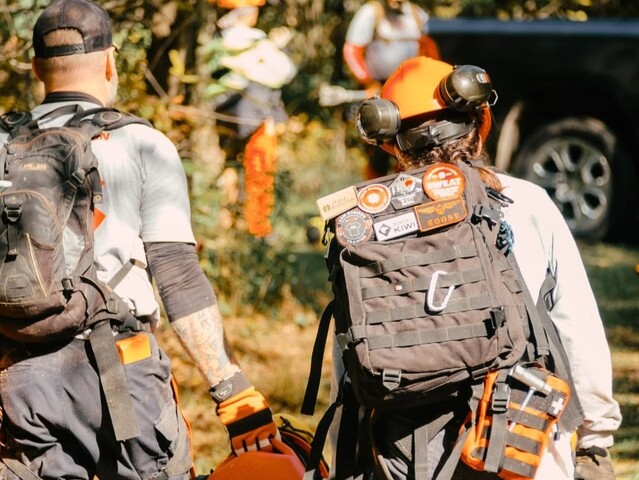
Right now, Team Rubicon has greyshirts on the ground in the Parkland, albeit in small numbers for now - they're running reconnaissance teams to collect damage evaluations, which will help the organization find where their resources are most needed in the coming weeks.
"They are in the process of conduction reconnaissance missions, so trying to understand actually what the needs are. The first thing we do when we get to a disaster zone is we try to understand what are the unmet needs. When we've understood that, the second question we ask is, what can we do as an organization to fill those needs...right now, we are patrolling the area trying to figure out exactly how extensive the damage is, where the damage is, and what that damage looks like in terms of what we can offer. So we have 4 different reconnaissance teams working right now, again their main job is to gather information on what the damage is, and try to figure out where we can fit in," said Kaplan.
With the scale of the disaster response in the Parkland, Team Rubicon will be working with various other groups and organizations to ensure things go smoothly. One of Team Rubicon's big selling points is a large number of their volunteers are Canadian Armed Forces veterans, or former first responders. Kaplan said the skills those people have make them perfect for working in disaster zones.
"The reconnaissance phase often does involve a lot of liaison with other agencies, this is going to be a fairly complex recovery effort, it involved the province, it involved the federal government, it involves a bunch of the municipalities, so part of the job of that reconnaissance team is to identify who are all the key players, and how can we work to assist those players...people that come from military backgrounds or first responder backgrounds have a very unique ability to operate in austere environments, operate under a great deal of pressure, to emphasize operational execution despite all the many challenges that you face, and all the sort of issues that can arise in a disaster setting, as you can imagine it's a very fluid setting," said Kaplan.
Kaplan said he expects the reconnaissance teams to complete their work in the next few days, helping Team Rubicon determine where their resources are best used, and what kind of resources, like heavy equipment or chainsaw teams, are best utilized.