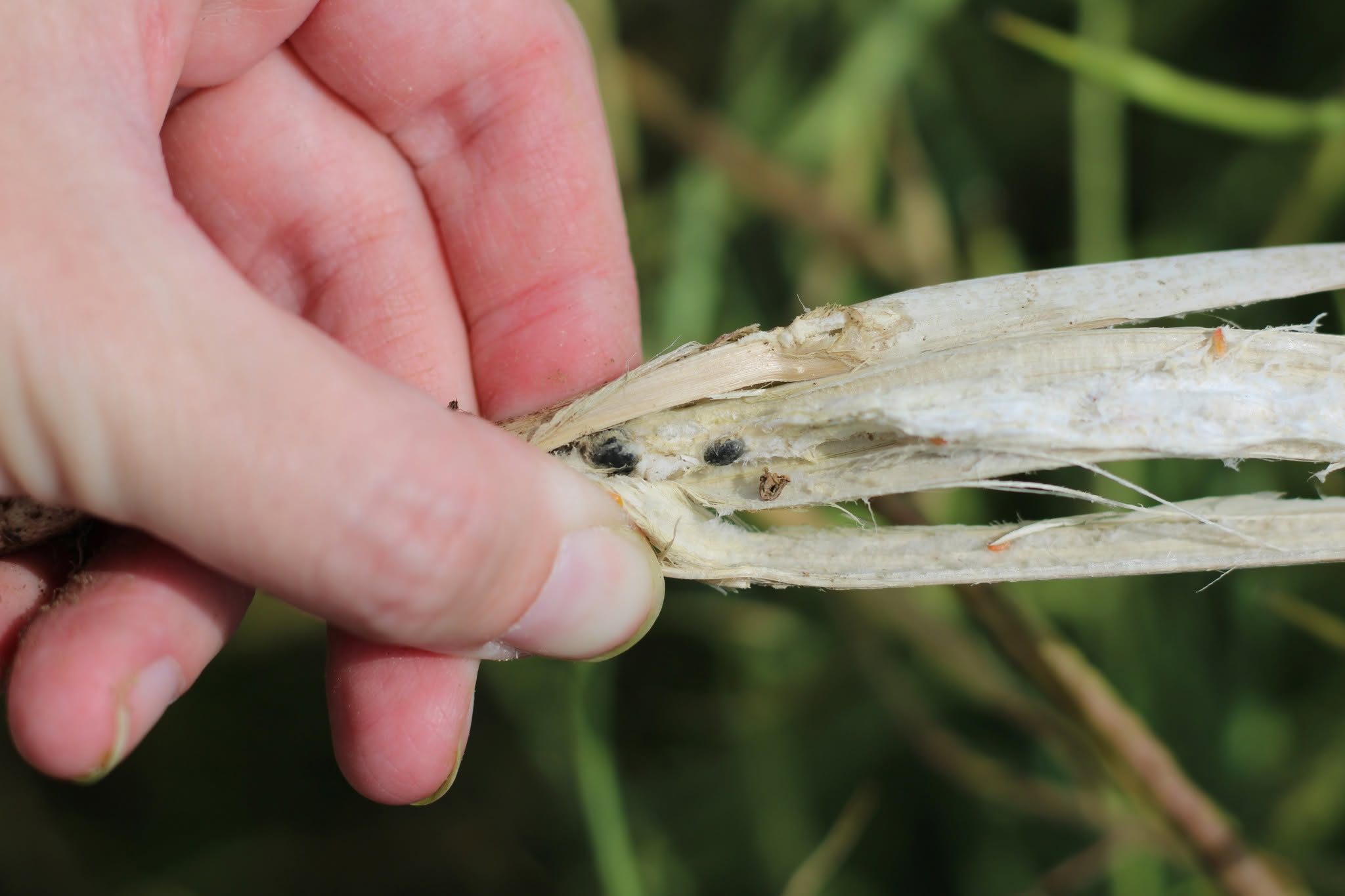
The Canola Council of Canada has put out a call to farmers across the country for sclerotinia samples to help their research on the effectiveness of fungicides and other best practices.
Chris Manchur, Manager or Research, Innovation and Resilience, said the large scale of the project, combined with how this year's weather has affected the frequency of sclerotinia, will be a great way to help influence future best practices.
"This project involves taking a look at samples collected across the Prairies, and evaluating which fungicides are still effective for them, and trying to identify if there may be any areas of concern. So right now we've kind of done a couple years of collection so far, but given the extent of sclerotinia infections we're hearing reports of with the weather we've had this past year, this year is an excellent year to go and get some more collections to really strengthen up this project," said Manchur.
The sample collection process isn't too difficult. Manchur recommends whenever you're in the field, whether it's for swath timing or desiccation, or any other reason, keep an eye out for signs of sclerotinia infections, and if you find any sclerotia-infected canola, look for small resting bodies. Those are what they want sent off.
You can click here to visit the Manitoba Canola Growers website with more details on sample collection and submission. Manchur said because there aren't any costs associated for farmers, it's a good thing to consider, especially with all the positives that will come from their research.
"This is a great opportunity to take a closer look and see maybe if there's new opportunities for sclerotinia management, maybe it's fungicide timing, as well as helping support some good research that may lead to new practices being recommended in the future," said Manchur.
According to Manitoba Agriculture, Sclerotinia is one of the most serious crop diseases in the province, often leading to severe crop loss and yield reduction.