NewsNow

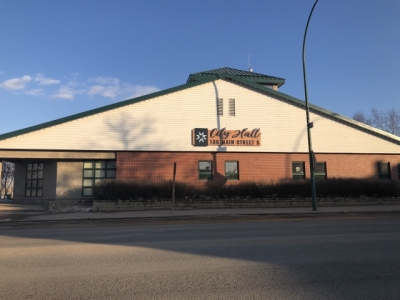
If you're in Neepawa and have noticed a slight drop in water pressure recently, there's no cause for alarm. The Town of Neepawa has started cleaning and inspecting the water tower.
Denis Saquet, Operations Manager, said according to the town's records, they haven't drained and cleaned the tower in a while...since it was built in the '80s!
"The tower was constructed in 1982, and to our records, it has never been drained for inspection and a full cleaning of the interior. So this is a full cleaning, and then we'll do an investigative report based on the contractor we've hired, they'll go through and identify any deficiencies that we need to repair. In all likelihood, those repairs will not happen this year," said Saquet.
The town has said the inspection and cleaning will take a maximum of 2 weeks, but Saquet expects it to be complete much sooner. Until then, the drop in water pressure will be the only noticeable effect for residents.
"Now that we've taken the tower offline, we're controlling all pressure. We've got it dialed in pretty good now from the water treatment plant, the guys are just doing all the pump control there," said Saquet.
If any repairs are needed for the water tower, Saquet said those will be handled in next year's budget.

- Details
- Contributed by Ian Gillingham
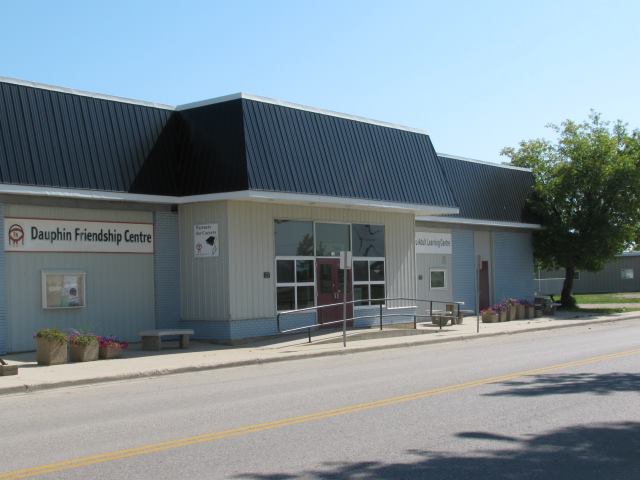
On Friday, there's lots of things going on at the Dauphin Friendship Centre to mark a special day: this year is the 30th anniversary of National Indigenous People's Day.
Jarri Thompson, Events Coordinator at the Dauphin Friendship Centre, went over a few of their events, and it's already shaping up to be a day full of learning and sharing cultures.
"Starting at 9:00 AM, we're going to be having a come-and-go tea with a 'The History of Indigenous Peoples' documentary playing in the background, there will be dainties, fresh bannock, coffee, tea, juice," said Thompson.
That's just one of the several events going on for the day. They also have entertainment, storytelling, dancing, and lots of fun things to make it a fun day. They're also having Red Road Compass with an indigenous display, and Thompson said his work is always very hands-on.
"You can touch [the display], he'll teach you about Indigenous medicines, about the items that you see on the table, Indigenous history, he's very knowledgeable, so if you have not met Shawn from Red Road Compass, come see him between 1:00 and 4:00 in the green space," said Thompson.
National Indigenous People's Day has only been recognized by the Federal Government for 30 years, but the culture and traditions that the day is designed to highlight have been around for much, much longer.
"Especially with recongiliation being a big thing right now, we are highlighting culture, highlighting our history, the resilience of Indigenous people, and not just highlighting the past, but bringing it back into present day and into the future, growing that culture we didn't have a chance to grow," said Thompson.
If you feel like helping out the Dauphin Friendship Centre either with their Indigenous People's Day celebrations, or other events in the future, they're always looking for more volunteers.
"They are what make us run. As a non-profit organization, we depend on as much volunteer work as we possibly get," said Thompson.
All across Canada, National Indigenous People's Day serves as a great way to further the spirit of reconciliation, and the fact that at the end of the day, we all live in the same place.
- Details
- Contributed by Ian Gillingham

- Details
- Contributed by Jeff Henson
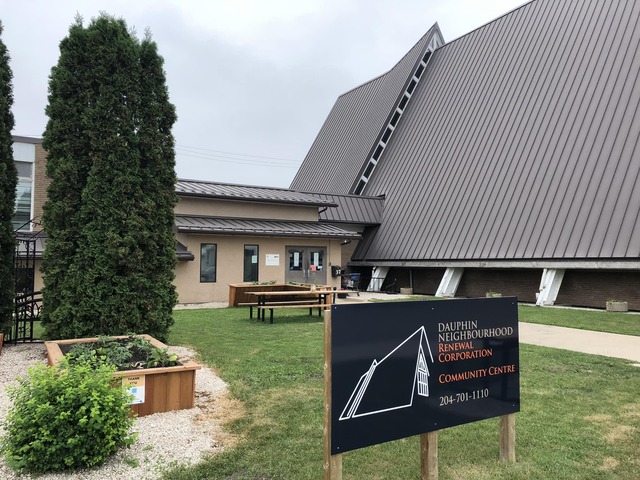
The Dauphin Neighbourhood Renewal Corporation's Annual General Meeting is set to take place tonight. It'll be at the DNRC Community Centre at 37 3rd Ave NW, and starts at 5:00 PM.
Amanda Novak, Executive Director of the DNRC, said it's usually a good chance for them to share how they've done over the year, what their plans are for the year ahead, and most importantly, to hear directly from the people they help.
"When we host our AGM every year, we go over all the community impacts that we've made in priority areas, such as economic development, community connecting, youth and families, housing and homeless, and recreation and green space," said Novak.
In a small sneak peek of what's to come in the meeting, Novak shared some details about further plans around the Little Neighbours Play Space Committee.
"We are working on a fundraising campaign with the Little Neighbours Play Space Committee in which we're trying to raise funds to enhance the indoor playground from Parkland Crossing," said Novak.
One of the DNRC's key priorities is housing and homelessness. Novak also shared an update on one of their big upcoming projects related to that.
"We also have secured some funding for a transitional housing home for women who are escaping family violence or other related trauma," said Novak.
You'll hear more about these projects, and more, at tonight's Annual General Meeting, which will be Novak's last as Executive Director. She's accomplished a lot of things in her time with the DNRC, including securing funding to renovate the DNRC community centre, and working with several private and government organizations to help better our community.
"I feel really good about it. It hasn't been without it's challenges, that's for sure, but that amount of things that we've been able to accomplish in 5 years is certainly notable," said Novak.
The Dauphin Neighbourhood Renewal Corporation's Annual General Meeting is open to anyone who wants to attend.
- Details
- Contributed by Ian Gillingham
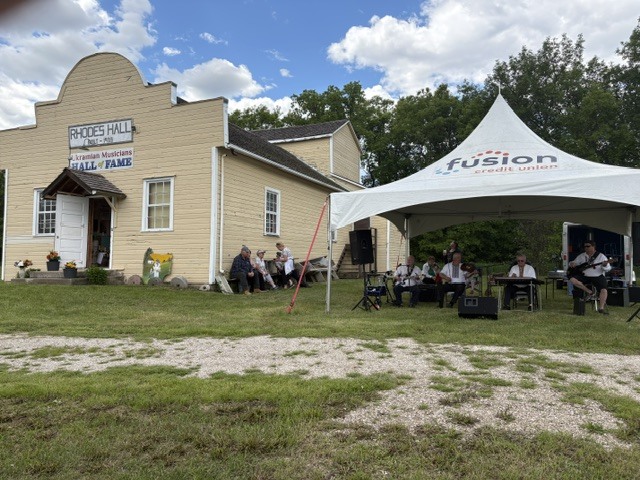
The Ukrainian Heritage Village south of Dauphin will soon have an expaded agricultural taste to it.
Construction of a 40ft by 100ft Agricultural Heritage Building is expected to start later this year, and Jim Perchaluk said a log barn will soon be part of the landscape as well.
"We're just waiting on the mover right now, and we were hoping to have it done by today, but the movers are all tied up moving houses to northern Manitoba and whatnot, so we're on a waiting list with the mover, but the word I got as late as last week is, following Countryfest, we will be moving the building onto the Ukrainian Heritage Village museum site," said Perchaluk.
The barn was graciously donated to the Heritage Village by Jason and Lara Beyette. Perchaluk said the donation will go a long way, helping to further showcase and preserve the Parkland's rich agricultural heritage.
"We're very fortunate with a local donor to give us a log barn. The building belongs to Jason Beyette, and thanks to Jason and his wife Lara, the Ritchie family, they donated cash towards the moving of the building, along with the Dauphin & District Community Foundation," said Perchaluk.
Perchaluk expects the construction of the Agricultural Heritage Building to be complete by next year.
- Details
- Contributed by Ian Gillingham

After being closed since June 8th due to flooding in the community, Minitonas school is set to re-open to students and staff on Wednesday.
Swan Valley School Division Superintendent Rob Tomlinson says some consideration was given to keeping the school closed until the fall, but he feels bringing the students back will be a positive for them.
"I think for some of our families, especially having their littles back in school will free them up to continue the work that is needed to be done to their homes. We want to finish the year on a positive note by getting our kids back and getting some routine, and having some of those fun activities that we do in June to finish the year out on a positive note. "
Tomlinson admits it will be a soft, re-opening of the school, with a number of wellness activities planned.
He adds members of their crisis team will be on hand to support students and staff that are struggling.
- Details
- Contributed by Jeff Henson

A novice driver with a valid learner's license was ticketed for careless driving on Tuesday.
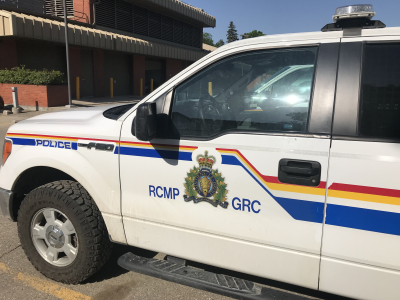
At 10:45 a.m., Dauphin RCMP responded to a van hitting a restaurant on the 1500 block of Main Street South in Dauphin. The driver mistook the gas pedal for the brake and drove the vehicle into the side of the building.
A 20-year-old female sitting at the closest table suffered minor injuries.
The fine was $672.

- Details
- Contributed by Darnell Duff
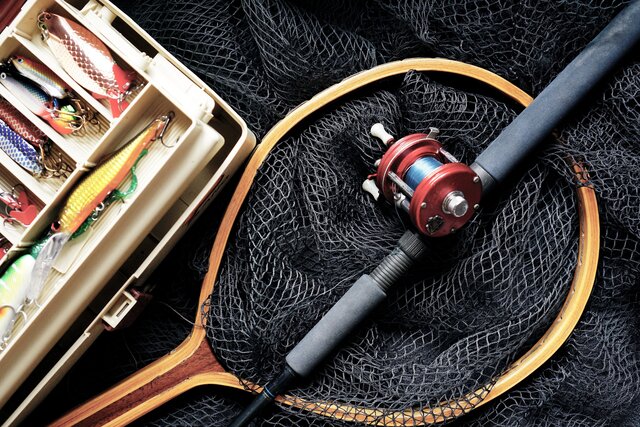
It's an event that's been running for more than a decade.
On Wednesday, it returns to Uncle Bob's Trout Pound. Intermountain Sport Fishing Enhancement hosts a family fishing season-opening event.
The best thing is, it's open to anyone, says Rod Carberry.
"You know, last year, we had probably 60 kids show up for it. It seems to be a popular event," said Carberry. "There has been lots of positive feedback over the years. Seeing the kids not only catch fish, but sometimes it's their first ever, so it's super cool."
It will take place from 5:00 to 8:00. A passionate angler himself, Rod loves seeing kids have fun fishing. He's dedicated so much time to it, and on Wednesday, he hopes to see another great turnout for an event that has become a marquee one on the fishing calendar.
"To share the knowledge and see the experience," added Carberry. "I won't get into too much depth, but it changes some people's lives, because it creates a hobby for life. It's so cool to know that someone has developed this hobby that will shape them. Fishing is such a unique sport that provides so much joy and challenge."
Bait and equipment will be supplied at the event. Manitoba anglers catch hundreds of thousands of fish every year. While the total certainly won't be anywhere close to that on Wednesday, Rod says there's a great opportunity to make a catch.
If you've never caught one before, now's the time. If you have, it's a great opportunity to add to your total.
"You know, we were out there last night getting the site ready, and the fish were jumping like crazy," Carberry ended. "It was super hard for me not to throw a rod and a line in to try and catch them. The fish are there. They aren't big, but there are lots of them. There will definitely be fish caught."
If you have any questions ahead of Wednesday's event, call or text Rod at 648-6587.
- Details
- Contributed by Darnell Duff
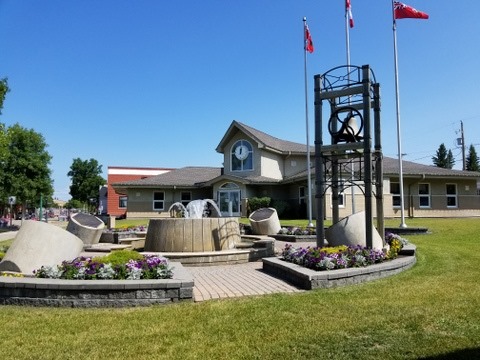
The Municipality of Russell-Binscarth is gearing up for their Town-Wide Garage Sale on Saturday, with tomorrow being the last day to add your sale to the map.
Amy Tweet, Recreation Director for the Municipality, said if you're planning on having a garage sale that day, there's no downsides to getting your sale listed on the map.
"Currently we have over 20 garage sales listed on our map, it's free for people to register, and on Thursday I'll put a map together and I'll post it online, as well as have paper copies here at my office for people to pick up...it's a good idea to sign up because we have a town map, and all of their addresses will be plotted on that map, and so it'll be easy for people to find them" said Tweet.
For the second year, they're also opening up their arena for anyone out of town who wants to bring some stuff to sell. Tables in the arena are $20, and to book one, you can contact the Municipality.
Tweet also said the Town-Wide Garage Sale is usually a big hit, and she hopes to get even more sales signed up before tomorrow.
"I don't know about anybody else, but I certainly have enough things in my house to get rid of and declutter that my grown children don't want, so it's always a good idea to get rid of the things that we don't need...I just hope for a really nice day, and people can get out in the community and go up and down our main street and visit our shops, and our coffee shops," said Tweet.
If you want to have your sale added to the map, or if you'd like to book a table in the arena, call 204-773-2422 before the end of tomorrow.
- Details
- Contributed by Ian Gillingham

No charges are expected after two scary scenes over the weekend.
On Saturday at 11:00 a.m., Dauphin RCMP responded to a single-vehicle collision near Grandview on Highway 366. A 46-year-old from Roblin was driving a van when he hit the gravel, lost control, and flipped over.
He was wearing his seatbelt and was not injured.
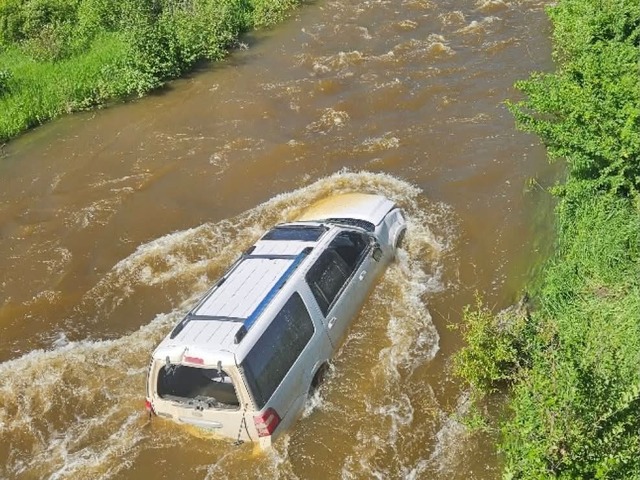
At 4:10 p.m. on Saturday, an SUV went into the river on Highway 5 near Grandview. Emergency crews rescued the 25-year-old man from the roof of the vehicle, and he wasn't injured.
He's reported to have been towing a cattle chute and came over the hill, where he lost control.
He tried to correct, but went down the embankment and into the river.
- Details
- Contributed by Darnell Duff

Canada Post has announced they're making the switch to community mailboxes for around 485,000 addresses in 2026 and 2027. Luckily for Dauphin and other Parkland communities, the only changes listed for Manitoba are in Winnipeg and Portage la Prairie.
Canada Post's decision to end door-to-door delivery in certain areas has been a hot topic for both the crown corporation and the worker's union. Canada Post has been seeking to cut costs for quite a while, with the usage rates of other couriers like Purolator or UPS on the rise. But the Canadian Union of Postal Workers has been critical of any decisions involving cutting jobs.
According to Canada Post, almost three quarters of Canadians already get their mail through centralized mailboxes, such as Canada Post-operated community mailboxes and apartment mail rooms. They say over the next 5 years, they plan to convert around 4 million addresses in total to community mailboxes.
Looking to the future, it's very realistic for Dauphin or other small towns in the Parkland to make the switch to community mailboxes, looking at the population density of certain areas. For now, the only areas being converted are in Winnipeg and Portage la Prairie, the first 3 digits of those Postal Codes being: R1N in Portage la Prairie, and R2P, R2R, R2V, R2W, R2X, R3E, R3H, R3T, and R3V in Winnipeg.
- Details
- Contributed by Ian Gillingham