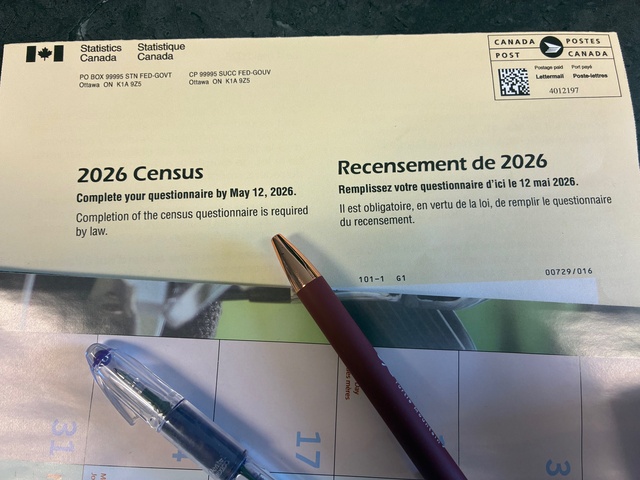
If you've checked your mail lately, you've more than likely seen a yellow envelope from Statistics Canada. 2026 Census invitations have been sent out to the majority of Canadian households.
Puja Challenger is the Regional Director for the Census in Western Canada. She said by far the easiest way to get your census information back to StatCan is to complete the form online. She said for herself, it took less than 7 minutes.
"The best way to not have to deal with people coming to your property is to complete the census online or through our census help desk...it's quick, it's secure, and can be done at any time, at the convenience of Canadians," said Challenger.
Challenger's role covers all of western Canada, including Manitoba, Saskatchewan, Alberta, British Columbia, Yukon, and the Northwest Territories. She knows better than anyone that rural Canada presents several unique challenges to data collection. StatCan has a lot of different measures in place to find solutions to these unique challenges.
"Often houses are spread out, some considered seasonal, and hard to see dwellings, some roads aren't clearly marked or numbered, not always accessible all year round, limited mail delivery in some areas, not every household receives regular mail, and in some areas there are issues with connectivity...so in many rural areas, our collection strategy does include having census employees hand-deliver invitation letters door-to-door for the census, we also prioritize local recruitment and hiring, appreciating that those living in the communities or nearby know the area," said Challenger.
Aside from it being the law, why fill out your census information? Challenger said a big reason for rural Canadians to fill out the form is to make sure they're propertly represented, at all levels of government. Even though the census is run by StatCan, a large number of companies and businesses use census data to see where they should be.
"It allows for informed decision making and planning in areas that are important to all local communities, like healthcare services, employment programs, community programs, emergency services...the data is used by all levels of government and Canadian businesses, and various non-government organizations as well, whether it's determining whether a business is going to start up in a certain location, and what is most needed by the community," said Challenger.
According to Statistics Canada, under the Statistics Act, all Canadian households are required to complete a Census of Population questionnaire, and all agricultural operators are required to complete a Census of Agriculture questionnaire. If you refuse to complete the census, you can be fined up to $1,000.