NewsNow
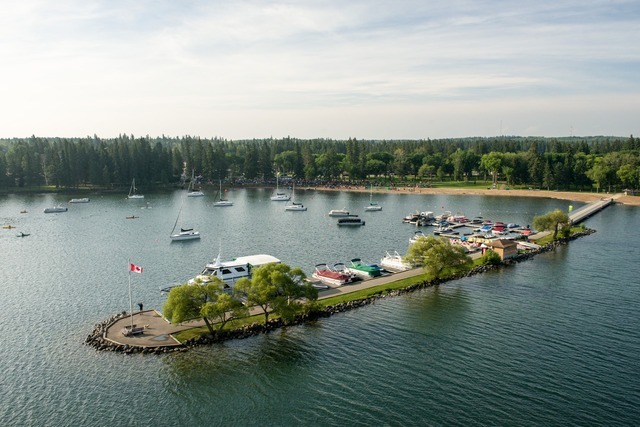
There will be boats back on Clear Lake in Riding Mountain National Park this summer.
Parks Canada announced last week its plans to reintroduce motorized watercraft on the lake for the first time in three years. In a release, Parks Canada shared its collaboration with Keeseekoowenin Ojibway First Nation. Not long after the release from Parks Canada, Chief Dwayne Blackbird of the Keeseekoowenin Ojibway First Nation issued a statement.
It read that at no time did Chief Blackbird or the Keeseekoowenin Ojibway First Nation provide free, prior, and informed consent to the decision to reintroduce motorized watercraft on Clear Lake. Clear Lake exists within the traditional territory of Keeseekoowenin Ojibway First Nation and remains subject to the Nation's inherent and Treaty-protected rights, responsibilities, and stewardship obligations.
CKDM NewsNow recently got in touch with Dan Mazier for his comments.
"They have a right to speak out against what they feel is not fair, and so does the public as well," said Mazier. "At least the conversation is now public. I'm sure RMNP and the community can come to a place and start talking about moving forward."
When Mazier learned of the ban lift, he said he was pleased for the community.
He says the lifting of the ban is huge for the community. At the same time, he said it was very frustrating that the Park was dismissing thoughts and concerns about the ban over the past two years.
"You took summers away from a lot of families. That's what broke my heart more than anything," added Mazier. "To enjoy the great jewel that we have in the Park and take it away from many people, that saddened me. We're in a better place now. I think we have a park administration that can work with whoever comes in and the challenges moving forward."
As part of last week's announcement, there will be a new watercraft management plan. It'll include an expanded no-wake zone to help protect shorelines.
Currently, under Transport Canada's vessel operation restrictions, vessels are limited to operating a maximum of 10 kilometres per hour within 30 metres of shore.
The plan includes a mandatory tagging program, two weekly non-motorized days, and designated dawn and dusk "quiet" periods for non-motorized use only.
"Does two days a week stop the spread of zebra mussels? What are we doing that for?" ended Mazier. "The dusk to dawn, I don't know if people want to go out fishing. If it's to stop the spread of zebra mussels, there is another reason why. That is what I would be questioning about it. It can be a slippery slope."
All watercraft, fishing gear, wetsuits, and inflatables must be inspected by Parks Canada staff and decontaminated as necessary.
The Clean, Drain, Dry protocol must be followed. Motorized watercraft are only allowed on Clear Lake and must be secured to your trailer with a Parks Canada tag when not on the water.
Non-motorized watercraft, including kayaks, canoes, paddleboards, and water equipment, must choose one annual permit. This permit is for Clear Lake or other outlying lakes within RMNP.
The new watercraft management plan could be implemented as early as 2027.

- Details
- Contributed by Darnell Duff

National Canadian Film Day highlights the achievements of Canadian filmmakers and promotes Canadian film culture.
It involves thousands of screenings in movie theatres, community centres, libraries, schools, and online.
In Dauphin, the Public Library at 504 Main Street North is ready for what should be an exciting day on Wednesday.
Tara Elliott with the Public Library says they've been celebrating Canadian National Film Day for almost a decade, and this year is no different.
"It's a fun day that we like to participate in. Canadian film often doesn't get celebrated enough," said Elliott. "It's something as a library we want to make sure people have a chance to see. Many of these films do not make it into our wonderful theatre here."
It'll be a jam-packed day of Canadian film.
"It is. I've filled up the day basically right from the start," commented Elliott. "We have films starting at 9:45 with Fireheart with is a 92-minute animated film."
Animated short films take centre stage at 11:25 before Ice Queens, a 44-minute documentary, hits the screen at 12:30.
Canada Reads begins at 1:30, followed by Indigenous short films at 3:00. The finale is at 5:00. It's called Score: A Hockey Musical, which is 93 minutes.
Mocktails and coffee will be available for purchase for $5 each. All the proceeds go towards the library's current fundraiser.
"We are actually fundraising because we need new washrooms here at the library," ended Elliott. "It's going to take a while for us to raise those funds, but it's a fun way to start off that fundraising goal."
The ultimate goal is to raise $100,000.
So celebrate National Canadian Film Day with the Dauphin Public Library and donate to a good cause.
- Details
- Contributed by Darnell Duff

A 23-year-old Swan River man will spend 90 days in jail after stealing from a liquor store on Main Street in that community.
Creed Hather was already wanted for stealing liquor from the store on three previous occasions within a month, when he took a bottle of whiskey from the store without paying on April 9th at around 1:45 in the afternoon.
He was arrested and faced four charges of theft under $5,000.
In Dauphin court the following day, he was found guilty on one count, and sentenced to the jail time as well as one year of probation.
- Details
- Contributed by Jeff Henson
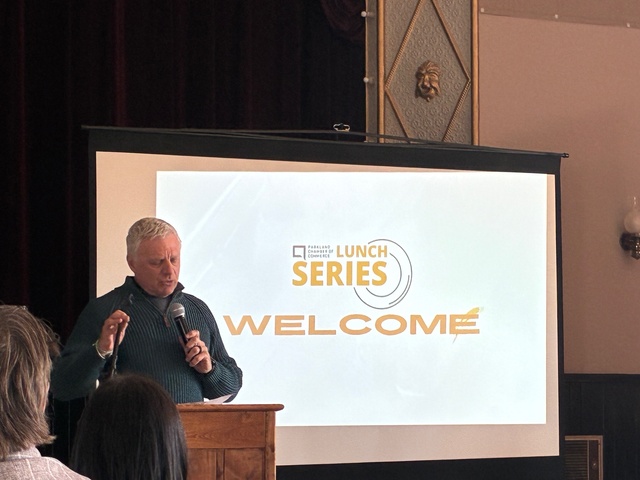
Today was the Parkland Chamber of Commerce's annual State of the District meeting, where business, city, and municipal leaders from across the Parkland gather to give updates on their plans for the year.
Kamryn Winters, Executive Director of the Parkland Chamber of Commerce, said it's sometimes a challenge to make sure they reach as many Parkland municipalities as possible, but with her past experience with big events, the planning wasn't too much of an issue.
"I would say the biggest challenge for State of the District is just working around schedules, not knowing when council meets for the different municipalities, and just making sure that any municipality even if they can't attend in person if they want to send a report we would do that. We have about half the municipalities attending in person, and half that we hope to get a report from them and send it later...I'm definitely an events coordinator so that part doesn't scare me, and of course we've had a lot of lunch series events, I've attended the lunch and learn ones in the past just as Countryfest, so for me each lunch is different, so I'm going through the motions of first time for every one," said Winters.
Getting down to the details, the meeting started off strong. After opening remarks, Mike Csversko with Fusion Credit Union gave a snapshot of how finances look like for businesses and farms in the Parkland. He said especially when it comes to farms and agriculture related businesses, input price increases continue to be a big concern. But he also said it's not all bad news.
"On the flip side of that we're also seeing an increase in land prices as well, so not all doom and gloom. The equity that is built into the farms, a lot of them are multi-generational farms, large number of acres, that helps offset the pressures when it comes to financing and lending, just because of that balancing act between the equity and the operating costs as well," said Csversko.
Businesses aside, representatives from the City of Dauphin, RM of Dauphin, Grandview Municipality, Gilbert Plains Municipality, and Ste. Rose Municipality were in attendance to talk about their major plans for the year ahead. Big things from the City of Dauphin include partnerships with the RM of Dauphin to develop recreation strategy, and the approval of $1 million of the city's budget this year towards starting the project of revitalizing downtown Dauphin.
Outside of Dauphin, Grandview's plans for this year focus on sustainable renewal water and water related projects. They will be building up a reserve fund for renewal water and sewer system construction, and they have budgeted $600,000 towards renovations of the Sugarloaf Water Treatment Plant to build on access to sustainable water. Down the road, Gilbert Plains mentioned the recent purchase of a new fire truck thanks to the Manitoba GRO grant, and they will be moving forward with a new waste disposal site after it was fully approved by the province.
Coming from RM of Dauphin Reeve Ernie Sirski, this year's tax increase from the RM will be under 5%, despite challenges with their operating costs for maintenance and management. Sirski said that on his own farm this year, he's had to greatly increase his fuel budget, from $22 per acre up to $32 per acre. The RM will also be restarting the Parkland Regional Working Group.
Overall, many of the projects this year in the Parkland focus on essential services that people need not only to survive, but to thrive and be successful, both as individuals and as communities. Despite challenges with rising grocery costs, fuel costs, and other various costs of living, Parkland municipalities and cities seem committed to help out their citizens.

- Details
- Contributed by Ian Gillingham
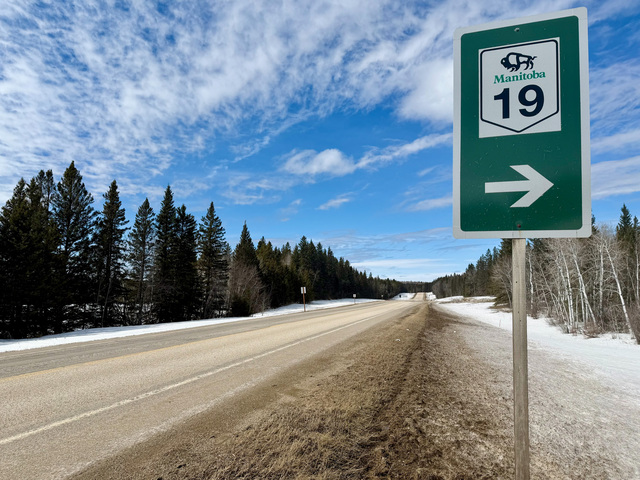
As the spring thaw continues, seasonal road restrictions are now being enforced to help protect highways in Riding Mountain National Park.
On Highway 19, vehicles over 6,006 lbs are not permitted.
On Highway 10, heavy trucks with three axles or more are restricted within the park. Vehicles with three axles or more may access the park from the south entrance only for deliveries to the townsite, Parks Canada maintenance compound, and the Clear Lake Golf Course.
Restrictions will remain in place until further notice.
- Details
- Contributed by Darnell Duff
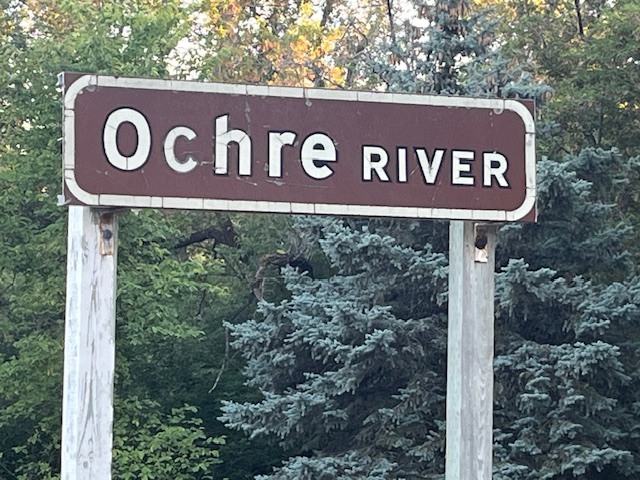
The province has once again updated its flood forecast for this spring, and it is not good news for farmers in the Parkland.
The latest update from Manitoba's Hydrologic Forecast Centre says there is an elevated risk of overland flooding in the Parkland, as temperatures are expected to rise above 10 C in the coming days.
Overland flooding can occur when rising temperatures trigger rapid snowmelt while ditches, culverts and drainage channels remain partially frozen or obstructed.
Gilbert Plains Municipality announced the closure of several roads over the weekend due to the latest dumping of snow, followed by rapid melting brought on by rising temperatures.
The report also indicated increased flood risks in the Interlake region, including the Icelandic River and Fisher River basins.
Based on the elevated flood risk, the province has arranged for tens of thousands of sandbags to be delivered to Peguis First Nation and surrounding communities.
Flood risk remains moderate to low elsewhere in the province.
- Details
- Contributed by Jeff Henson
In recent months, the price of farm fuels and other inputs like nitrogen fertilizers have skyrocketed. According to gasbuddy.com, the average gas price in Canada has climbed 60 cents per litre since the start of the year.
Manitoba Agriculture Minister and Dauphin MLA Ron Kostyshyn said the government is definitely aware of the uncertainty producers face, and the government is working on solutions both internally and in collaboration with the federal government.
"Supply and demand has been somewhat challenged, and unfortunately fuel costs and fertilizer costs continue to rise, which is directly related to our agriculture sector and to the general consumer, whether transporting food across Canada or across our province," said Kostyshyn.
A large part of why fuel and other input prices are climbing so high is the current conflict in Iran, one of the world's largest oil producers. Since the conflict started in late February, gas prices have risen 40 cents per litre in Canada.
"Fertilizer costs, fuel delivery costs are going up as well, so all around [the conflict] has done us no favours, in fact it's cost our taxpayers, farmers, agriculture producers a lot more money," said Kostyshyn.
Kostyshyn said he recently had a meeting with federal agriculture minister Heath MacDonald to talk about what can be done both at the provincial and federal level to help lessen the impact of rising prices on producers. Both Kostyshyn and MacDonald have lots of farming experience from their careers before government.
"That's a true team Canada approach, you can work with the federal government, you can work with provincial counterparts across Canada. We're all striving for the best result we can as far as for our population in our province, and across Canada," said Kostyshyn.
He also said agriculture minister like himself and MacDonald can't just use their own farming know-how to come up with solutions: they need to engage and listen to producers and groups across Canada involved in agriculture. He named Keystone Agricultural Producers, the National Farmer's Union, and CropConnect as a few examples.
"These are farm organizations that the federal and provincial government need to listen to, and listen to some of their suggestions and ideas. We don't want to see producers lose money in their farming operations. We know the cost of food is important, and we need to try and maintain it at a reasonable cost. And part of our duties as government, federal and provincial governments, is to work with organizations to make it somewhat less burdensome for producers, and I think that's part of our government and the federal government's commitment to work with our agriculture producers," said Kostyshyn.
Kostyshyn also said though the annual Agriculture Ministers Meeting is in July, it wouldn't be unusual for them to meet virtually beforehand considering the level of uncertainty that producers face right now.
- Details
- Contributed by Ian Gillingham

The Riding Mountain Park area has been a key spotting point for wild boars in Manitoba.
Dr Wayne Lees is project co-ordinator with Squeal on Pigs Manitoba, an organization that focuses on removing the invasive species from our province.
He says wild boars can cause damage in a number of ways.
"Because they are invasive, they will consume food sources that other native animals rely on. They can do considerable damage to the environment. They really rip up pastures, so they are very destructive to grazing land. And they can get into the cattle herd and spread other diseases to cattle such as tuberculosis and brucellosis."
He adds wild boars also carry African Swine Fever, which can be transmitted to commercial herds.
Last year, Squeal on Pigs Manitoba removed 206 wild boars from the province.
- Details
- Contributed by Jeff Henson
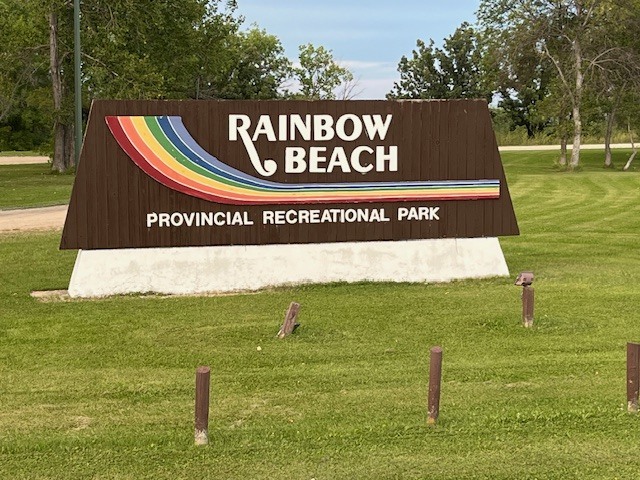
With the snow continuing to melt, there is yet another reason this week to be thinking ahead to the summer.
The reservation process for campsites in Manitoba parks opened Monday morning with cabins, yurts and group use areas being made available.
Parkland area parks such as Rainbow Beach, Manipogo, and parks within the Duck Mountains will be made available for reservations as of 7 am on Thursday.
Elizabeth Ostrop with Parks Manitoba says there are benefits to booking your campsites early.
"If you have a specific facility type that you would like to try out, such as a cabin or a yurt, those are very high in demand. So planning ahead on when you might want to book one of those is good. Or if you like to go on a long weekend, weekends tend to fill up quick so it is really about demand for a specific area."
You can reserve a spot by calling 1-888-482-2267, or online at manitoba.goingtocamp.com
- Details
- Contributed by Jeff Henson

The federal government announced last week they're allocating $10.6 million in funding for EV (Electric Vehicle) charging infrastructure projects across Canada. For rural Manitobans, a future where buying an EV isn't a bad idea could be a lot sooner than you'd think.
Dean Cooley, Manager of Dean Cooley GM in Dauphin, said it's already not a bad idea, but the practicality of EVs are different depending on your needs in a vehicle.
"To understand how to use an EV properly and how to plan for it and so on, gives you the ability to use an EV in this markplace quite easily...driving to Dauphin Beach to the golf course, driving to Clear Lake, driving to Brandon, short trips like that, there is absolutely nothing that would prevent an EV from doing that very acceptably. And I'll tell you, I got used to not going to a gas station which is very convenient, because 95% of all the charging you will do, you'll do in your own home, you'll do it in your own garage, so it's not about visiting charging stations on a regular basis," said Cooley.
Both federally and provincially, there are rebates and other incentives in place to encourage people to consider buying EVs. The federal government's Electric Vehicle Affordability Program gives a rebate of up to $5000 on certain EVs, and the Manitoba government's Electric Vehicle Rebate Program gives a rebate on certain EVs up to $4000. Cooley said that's a very good sign, but there's an important group that could definitely help cut costs for consumers.
"Provincially we have credits, federally we have credits, federally they're committed to strengthening the infrastructure. I personally think the government's doing what they need to do. I think that the next step is also incumbent on the manufacturers, so General Motors, Ford, Hyundai and all those different manufacturers, to continue to develop new products, things that are less expensive, things that have more range," said Cooley.
Cooley also said knowledge of EVs is a big barrier for a lot of people, which can be an easy fix.
"I've driven EVs, they're beautiful to drive, they're quiet, they're smooth, driving them is not an issue. It's the anxiety of range. How do I get to Winnipeg, when do I charge, where do I charge, how much does it cost to charge, all those questions are what keeps consumers from diving in and purchasing one," said Cooley.
According to the federal government, as of February 2026, 4.1% of all consumer vehicles in Canada are EVs.
- Details
- Contributed by Ian Gillingham
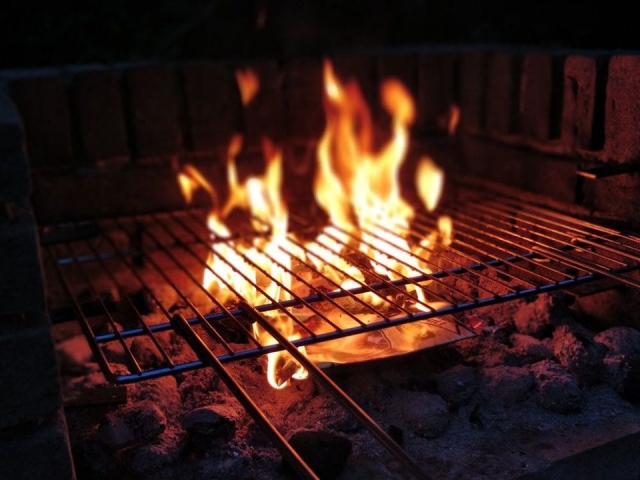
Earlier this year, the RM of Dauphin made some changes to the process of getting burn permits, mostly focused around convenience for applicants.
Ernie Sirski, RM of Dauphin Reeve, said the main change to allow online applications will help burn permits get approved quickly and with less of a hassle.
"One of the first [changes] is that you can do an online application, and if you do an online application, fill out the form, the burning permit is effective immediately, so there's no delay in the authorization or the implementation, so that's a positve step...you do however, before you get your first time burning permit, you have to get authorization from the office, and that's all outlined in the application form...if there's any questions, just call the office at 204-638-4531 and ask for Alana, because she'll be able to walk you through the entire process if it's not entirely clear what's going on," said Sirski.
The convenience factor of online permits and immediate effect is great, but that's not the only great thing. Sirski said because of how quickly burn conditions can change, it's a good thing for safety too.
"The reason we implemented this change is because conditions can change very quickly throughout the course of the day. You can have a really heavy wet dew first thing in the morning, then by 11 in the morning it's perfect burning conditons," said Sirski.
He also said anyone seeking a burn permit should still check with the province for more specific regulations, becuase they still regulate those.
"Should phone into the province, make sure that burning is allowed during this period because the province still administers that as well. Have to make sure that fires are out a certain time of day depending on the season, and they shouldn't start before a certain time," said Sirski.
Click here to visit the RM of Dauphin's website page for both information on burn permits, and the online burn permit applications.
- Details
- Contributed by Ian Gillingham